Articles
Plain-language reading on using AI well: at work, in teaching, in study and at home. Each article comes from one of our free courses, so you can read first and learn step by step afterwards.
AI Governance and Policy
AI governance in plain terms: rules, roles and checks
In many organisations, AI arrived before anyone decided it should. A software update added it to an existing product, a department bought a tool, and staff began using free assistants at their desks. AI governance is how an organisation regains a clear view of
4 minute read · From the course AI Governance Basics
AI Safety and Responsible Use
What parents need to know about AI in their children's lives
AI is already part of a child's day. It answers homework questions, chooses the next video, suggests replies in chat apps and, for some children, plays the part of a friend. A parent does not need technical knowledge to guide a child through this. What helps i
6 minute read · From the course AI and Your Children: a Guide for Parents
AI Foundations
What AI is, how it learns, and how to use it wisely as a student
Artificial intelligence can sound like something that needs a degree to understand. It does not. The main ideas can be explained without any mathematics or computer science, and once you have them, the tools become less mysterious and far easier to use well. T
5 minute read · From the course AI for Beginners
AI for Work and Business
AI for a small business: save time without risking your name
A small business owner is also the person who answers messages, writes the adverts, prices the work and chases the payments. AI assistants can take real time out of that load. They can also lose a customer in one careless message. This article is for owners of
4 minute read · From the course AI for Business Owners and Freelancers

AI in Your Field
AI in health work: help with the paperwork, never with the judgement
Health workers spend a large share of their time on words: notes, letters, rotas, leaflets, policies and reading. General AI tools are good with words, which is why they are tempting on a busy shift. This article explains where such tools can safely help aroun
5 minute read · From the course AI for Doctors and Health Workers
AI in Your Field
AI in legal work: never cite a case you have not read
Lawyers were among the first professionals to discover, publicly and painfully, that AI tools invent things. Filings have reached courts citing cases that do not exist. The tools remain useful in legal work all the same, for drafting, summarising and plain-lan
5 minute read · From the course AI for Lawyers and Legal Staff
AI for Government Officers
Agendas, minutes and actions: using AI around a meeting
The time a meeting costs is mostly spent outside it. Someone prepares the agenda and the papers beforehand, and someone writes the minutes, lists the actions and chases them afterwards. An AI assistant can shorten that work considerably. This article describes
4 minute read · From the course AI for Meetings
AI in Your Field
AI for musicians, artists and writers: choosing where your line is
Creative people have more reason than most to feel uneasy about AI. The tools were trained on creative work, they can imitate styles, and audiences are unsure what they are looking at. Yet much of a creative life is not the art itself, and AI can help there wi
5 minute read · From the course AI for Musicians, Artists and Writers
AI for Government Officers
AI in the public office: what an officer can safely hand to an assistant
Most hours in an office go on three things: reading, writing and organising. AI assistants can speed up all three. What they cannot do is decide, check or sign, and in public service those are the parts that carry accountability. This article is for public-sec
4 minute read · From the course AI for Officers: an introduction
AI for College and University
AI across the research cycle: three duties that do not transfer
AI tools can save a researcher time at every stage of the work, from scanning new papers to tidying code to explaining findings for a wider audience. The norms of scholarship still apply at every one of those stages. This article is for faculty members, postdo
4 minute read · From the course AI for Researchers and Academics

AI for Teachers
AI is already in your school: four decisions for a head teacher
In most schools, pupils, teachers and office staff are already using AI tools, usually without any guidance. Pupils use them for homework. Teachers use them for worksheets and reports. The office uses them for letters. None of this waited for permission. That
5 minute read · From the course AI for School Leaders

AI for School Students
Try, ask, check, own: four steps for using AI with schoolwork
This article is for pupils in the middle years of school, and for the parents and teachers who guide them. It does not offer shortcuts. It explains a simple routine that lets a pupil get help from AI and still do the learning. Before anything else, there is a
4 minute read · From the course AI for School Students
AI for College and University
A tutor, not a ghostwriter: using AI honestly in college and university
AI tools can explain a hard idea at midnight, quiz you before an exam and point out the weak sentence in your essay. They can also write the whole essay, and that is where the trouble starts. This article is for students in senior school, college and universit
5 minute read · From the course AI for Students
AI for Teachers
How teachers can use AI without handing over the classroom
Much of a teacher's work happens outside the lesson itself. There are plans to write, worksheets to make, papers to mark, reports to complete and letters to send home. A great deal of that work is writing, and writing is what general AI tools, such as chat ass
5 minute read · From the course AI for Teachers
AI for Teachers
Rewriting an academic honesty policy for the age of AI
Most academic honesty policies were written to deal with copying from a book, a website or another student. They do not say whether a student may ask an AI tool to explain a topic, comment on a draft or correct grammar, and so teachers answer those questions d
4 minute read · From the course Academic Honesty and AI: Setting the Rules for Your Institution
AI for Government Officers
From blank page to signature: drafting official documents with AI
Anyone who writes routine letters, notes for approval and summaries knows that the blank page takes more time than it should. An AI assistant can remove that part of the work. It cannot remove the responsibility that comes with a signature. This article descri
4 minute read · From the course Drafting Notes, Letters and Summaries with AI
AI for School Students
Revising for exams with AI, when there is no AI in the exam hall
In the exam hall there is no AI. There is only what is in your head and what your hand can write in the time allowed. That one fact should decide how a student uses AI during revision: only in ways that build memory and skill. This article is for school studen
4 minute read · From the course Exam Preparation with AI
AI Governance and Policy
A plain map of how governments regulate AI
Rules for AI now differ sharply from one country to the next, and they change often. This article offers a neutral map of the main approaches, for readers who are not lawyers. It describes the position as at November 2026 and is general information, not legal
4 minute read · From the course How AI Is Regulated Around the World
AI Foundations
How AI tools really work, and when to trust what they give you
You do not need to understand the mathematics behind AI to use it well. You do need a working picture of what these tools are doing, because that picture tells you when a result deserves trust and when it needs checking. This article gives that picture in plai
5 minute read · From the course How AI Tools Work
AI Foundations
How to ask an AI assistant so that the first answer is usable
Most disappointing answers from AI assistants trace back to the question. The assistant was given too little to work with and filled the gaps with guesses. Asking well is a skill, and it can be learned in an afternoon by anyone, with no technical background. T
4 minute read · From the course Prompting Skills
AI for College and University
Writing a dissertation with AI and remaining its author
A dissertation carries one name on the cover. That person answers for every sentence, every number and every reference in it, whatever tools were used along the way. AI can help at each stage of a research project, and at each stage there is a line it must not
4 minute read · From the course Research and Dissertation Writing with AI
AI Safety and Responsible Use
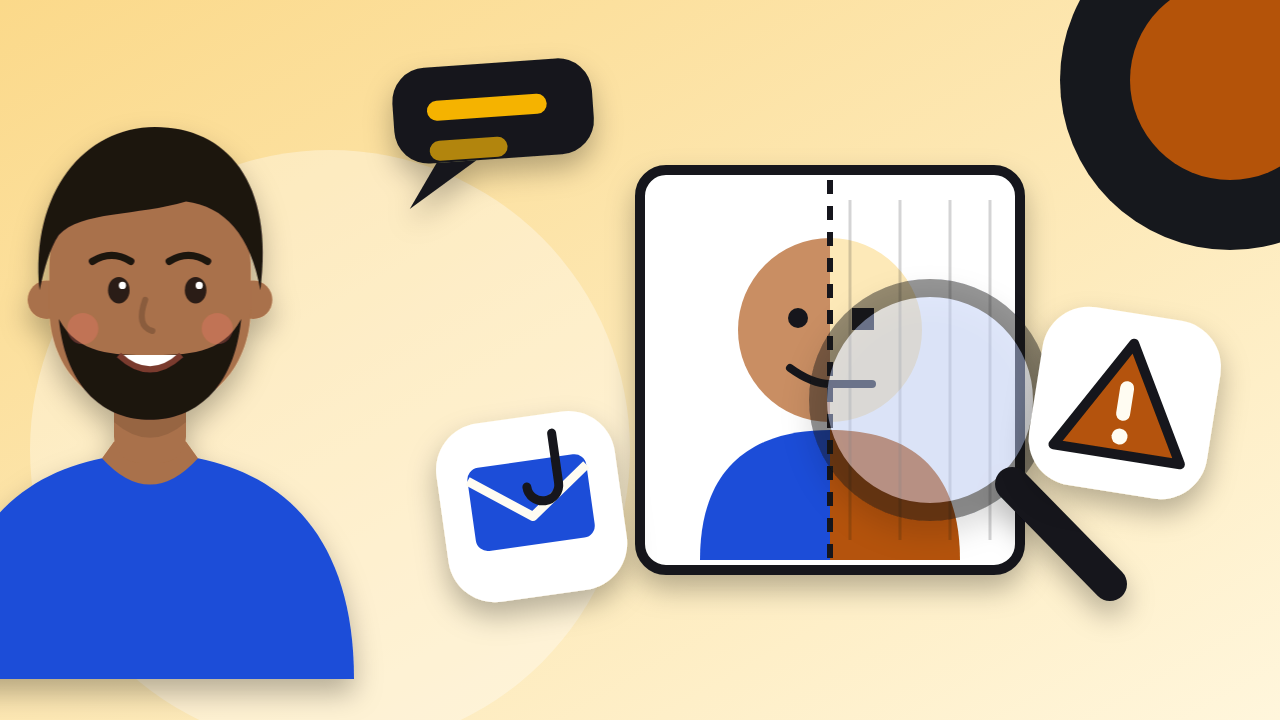
Stop, check, tell: three habits against fakes, scams and deepfakes
Fake messages used to give themselves away with bad spelling and clumsy pictures. That time has passed. With AI, a fake message, voice, photograph or video is now cheap to make, quick to produce and smooth to look at. So the old question, "does it look real?",
4 minute read · From the course Spotting Fakes, Scams and Deepfakes
AI for Teachers
Seven classroom activities that teach AI literacy with no devices
Pupils meet AI long before anyone explains it to them. A teacher of any subject can close that gap, and it does not take a computer lab. AI literacy for the middle years of school comes down to four ideas, and each can be taught in about twenty minutes with a
4 minute read · From the course Teaching AI Literacy: Classroom Activities
AI Safety and Responsible Use
Four questions to ask before you rely on an AI tool
Most advice about AI safety is either too technical to follow or too vague to use. What ordinary users need is a small set of habits that work with any tool, on any device, and that still work when the tools change. This article sets out those habits. They res
5 minute read · From the course Using AI Safely and Responsibly